

We’ve partnered with the Mental Health Forum at The Kennett School in Thatcham on an innovative project that puts students at the heart of designing training and solutions for their own mental health and wellbeing.
With our support, students attended several workshops to create “Digital Balance: Caring for Your Mind Online”, a webinar by young people, for young people, exploring mental health in the digital world. They identified a real need for clear, practical guidance and designed the content to be interactive, relatable, and based on their lived experiences.
The webinar covers questions, benefits and challenges young people face online, including the positives and negatives of social media:
Positives
- Connection and community
- Creativity and self-expression
- Emotional support and mental health resources
- Cultural awareness and empathy
Negatives
- Anxiety, low mood, and social pressures
- Distraction and loss of control
- Screen time and social isolation
- Exposure to harmful content
- Privacy risks
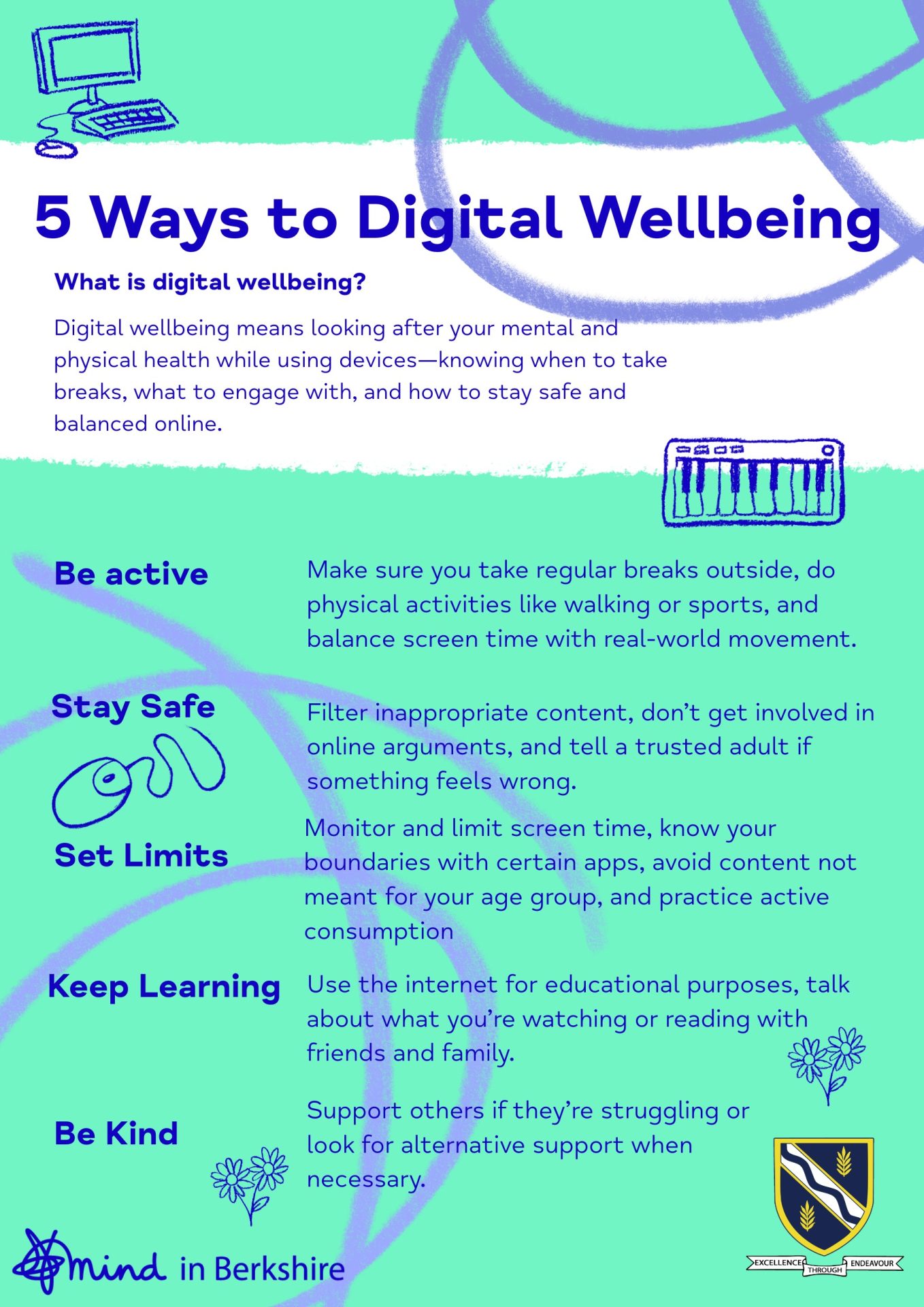
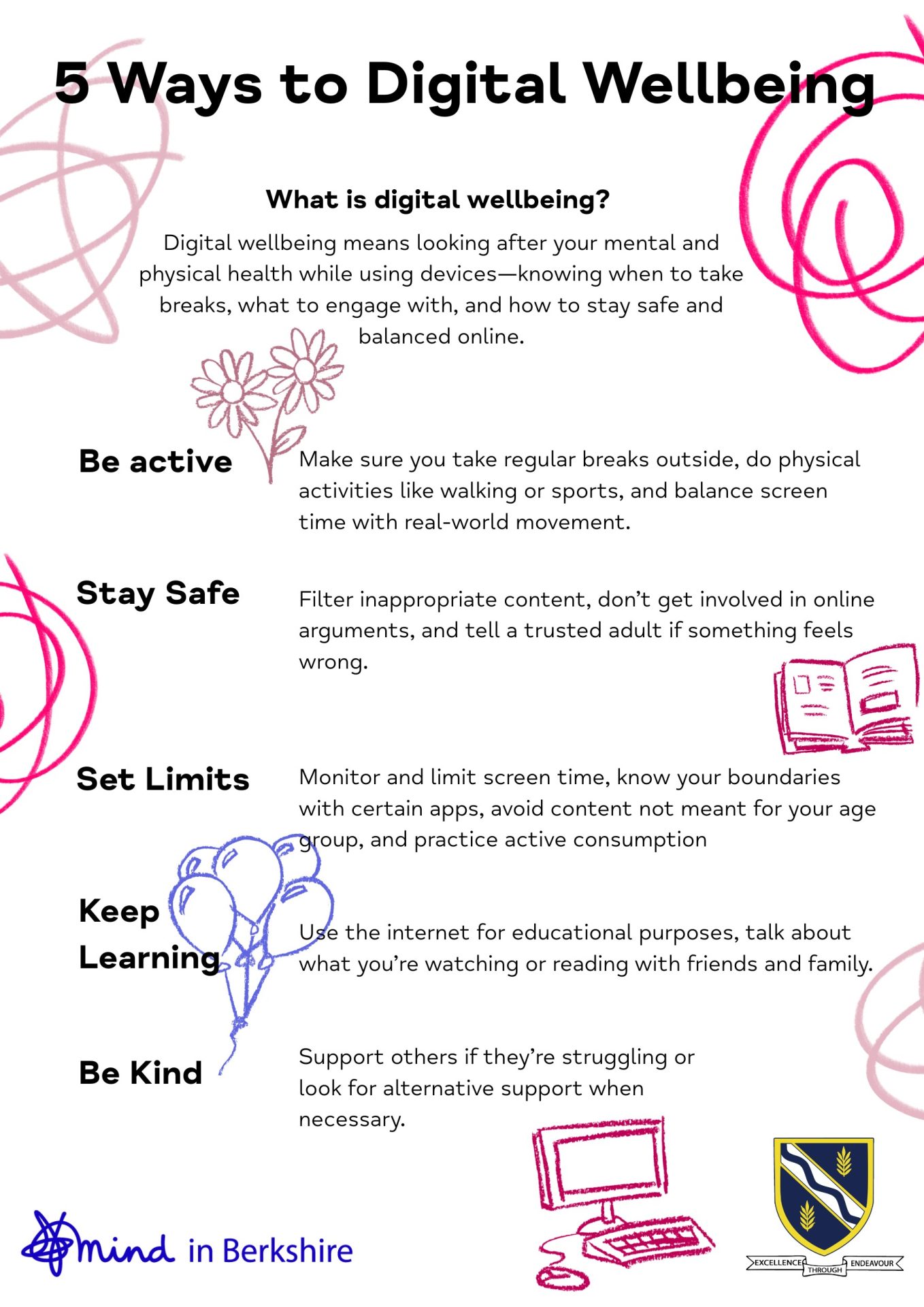
5 Ways to Digital Wellbeing
This information can be overwhelming. So, the students came up with some ways to stay safe online. For the students, Digital wellbeing means looking after their mental and physical health wellbeing while using devices – knowing when to take breaks, what to engage with, and how to stay safe and balanced online.
To encourage young people to look after each other online, the students created the 5 Ways to Digital Wellbeing:
- Be active – Make sure you take regular breaks outside, do physical activities like walking or sports, and balance screen time with real-world movement
- Stay safe – Filter inappropriate content, don’t get involved in online arguments, and tell a trusted adult if something feels wrong
- Set limits – Monitor and limit screen time, know your boundaries with certain apps, avoid content not meant for your age group, and practice active consumption
- Keep learning – use the internet for educational purposes, talk about what you’re watching or reading with friends and family
- Be kind – Support others if they’re struggling or look for alternative support where necessary
This peer-led approach helps young people understand their own triggers, develop coping strategies, and feel more confident talking about mental health. It also addresses emotional-based school avoidance, which has risen since the Covid pandemic, by encouraging open discussion and support among peers.
Thanks to funding from The Greenham Trust through West Berkshire Council, the students’ ideas have been turned into a resource that will be shared with schools across the West of Berkshire, potentially reaching thousands of young people.
The project is a powerful example of how young voices can shape mental health support and break down stigma, both online and in school communities.
Video
The purpose of this video is to educate both young people and adults about how young individuals can take care of their wellbeing online.
It is best used in a classroom setting with a group of young people to facilitate discussions about their internet usage and feelings related to it.
Throughout the video, there are points where viewers can pause, discuss, and provide feedback in groups.
For more information or any questions, please contact us at: getinvolved@oxfordshiremind.org.uk.
Posters
If you would like printed copies of these posters, please get in touch with our Involvement Team at: getinvolved@oxfordshiremind.org.uk.
Poster: pink – 5 Ways to Digital Wellbeing
Poster: white – 5 Ways to Digital Wellbeing
Poster: green – 5 Ways to Digital Wellbeing
Digital Wellbeing Feedback Form
If you have used the resources created by Mind in Berkshire and the mental health forum at Kennet School, please complete this survey. We’d love to know what you think about the resources.
News release
You can read more about the project in our Empowering Young People news release.